Pickleball Paddle Finder
Answer five quick questions to get the paddle weight, face, core, grip size and shape that suit how you play.
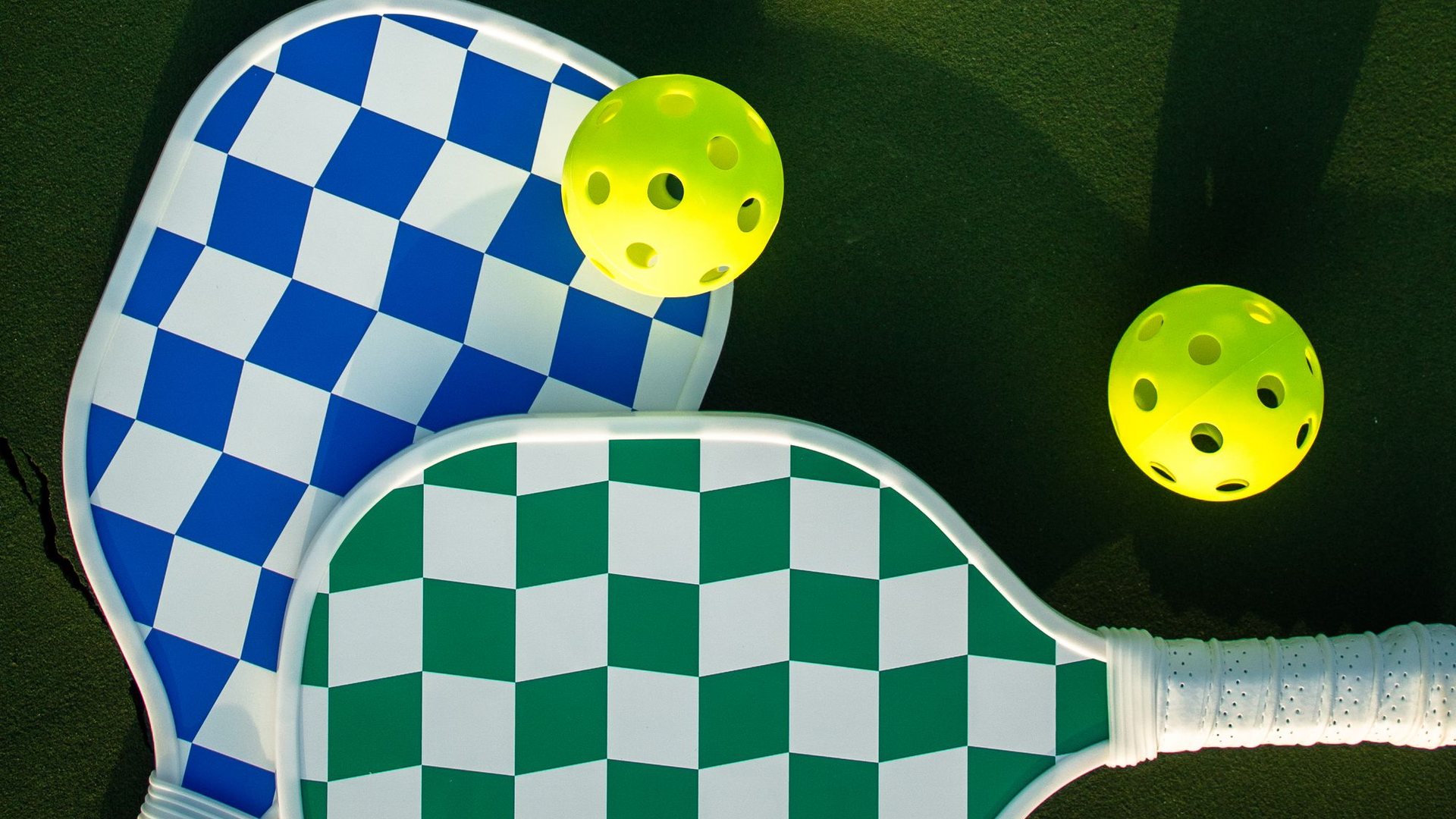
Which pickleball paddle should I buy?
Most beginners should start with a mid-weight paddle (about 7.8–8.2 oz), a 16 mm polymer core, a standard or wide-body shape and a 4.25" grip. Go lighter if you have elbow or shoulder pain, and heavier if you love to drive the ball. Answer the five questions above for a profile that fits you.
How to use the paddle finder
Tell us how long you have played.
Choose control, all-round or power.
Add arm pain, hand size and budget.
Get the weight, face, core, grip and shape to look for, then shop.
Pickleball paddle weight guide
| Weight | Range | Best for | Trade-off |
|---|---|---|---|
| Light to mid | About 7.3–7.9 oz | Arm or shoulder pain, smaller hands, quick hands at the net | Less power on drives |
| Mid-weight | About 7.8–8.2 oz | Most beginners and all-round players | A balance of power and control |
| Mid to heavy | About 8.0–8.5 oz | Power players and drivers | Slower hands, more strain on the arm |
Pickleball grip size chart
Measure from the middle crease of your palm to the tip of your ring finger, the same way as a tennis grip.
| Hand measurement | Grip circumference | Hand size |
|---|---|---|
| Under 4.25" | 4.0–4.25" | Small |
| About 4.25–4.5" | 4.25" | Medium (most common) |
| Over 4.5" | 4.5" (or 4.25" plus an overgrip) | Large |
Core thickness: 13–14 mm vs 16 mm
| Core | Feel | Best for |
|---|---|---|
| 16 mm polymer | Softer, more stable, less vibration | Beginners, control players, anyone with elbow pain |
| 13–14 mm polymer | Livelier, more pop | Power players who drive the ball |
Face material: fiberglass vs carbon fiber
- Fiberglass: extra pop and easy power. Great for new players.
- Carbon fiber: more touch and a balance of control and power.
- Raw carbon fiber: a gritty surface for extra spin and control.
- Thermoformed carbon: a stiffer, sealed build with more pop. Usually costs more.
Paddle shape: standard, wide-body or elongated
Standard and wide-body paddles have a bigger sweet spot and are more forgiving, which suits most players. Elongated paddles add reach and power, but the sweet spot is smaller, so they suit experienced and competitive players.
Which paddle is right for you?
- Brand new: a mid-weight fiberglass or carbon paddle with a 16 mm core. A beginner set with balls is the easiest start.
- Elbow or shoulder pain: a lighter paddle with a 16 mm core and a grip that fits your hand.
- Soft game and dinks: raw carbon fiber with a 16 mm core.
- Power player: a mid-heavy paddle with a 13–14 mm core, often elongated.
- Tight budget: a fiberglass paddle under $50 plays well for most new players.
Playing tournaments? Check that your paddle is USA Pickleball approved. Sanctioned events require it.
Common paddle buying mistakes
- Buying the heaviest paddle for power before learning control.
- Choosing an elongated pro paddle as a first paddle.
- Ignoring grip size, which causes strain and twisting.
- Spending a lot before you know your playing style.
Shop the Best Pickleball Paddle Sets for Beginners
You need this if: you are new to pickleball and want everything you need to start playing.
A beginner set gives you two paddles and balls in one order. We compared sets by weight, core and comfort, so they match the beginner profile above.
See Best Beginner Paddle Sets →Already playing every week? See the best paddles for spin and control instead.
Pickleball paddle shapes and size limits
USA Pickleball rules limit paddle size: the length plus the width can't exceed 24 inches, and the length can't exceed 17 inches. Within those limits, paddles come in a few shapes:
| Shape | Typical size | Feel | Best for |
|---|---|---|---|
| Standard | About 16" x 7.5–8" | Balanced, large sweet spot | Most players |
| Wide-body | About 15.5–16" x 8"+ | Biggest sweet spot, very forgiving | Beginners, doubles at the net |
| Elongated | About 16.5" x 7.5" | More reach and power, smaller sweet spot | Singles, power players |
| Hybrid | Between standard and elongated | Mix of reach and forgiveness | Intermediate players |
Pickleball paddle weights and lead tape
Many players fine-tune a paddle with lead tape stuck around the edge guard. Where you place it changes how the paddle feels:
- 3 and 9 o'clock (sides): widens the sweet spot and adds stability on off-center hits.
- 12 o'clock (top): adds power and swing weight, but the paddle feels slower at the net.
- Throat or handle: adds weight without making the head feel heavy.
Add small amounts, about 1 to 2 grams at a time, and play a session before adding more. Too much tape can strain the elbow.
What you get at each price
| Budget | What you usually get | Best for |
|---|---|---|
| Under $50 | Fiberglass or carbon face, polymer core, often sold in sets with balls | Beginners and casual players |
| $50 to $100 | Raw carbon faces for spin, 16 mm cores | Regular players who want spin and control |
| $100 and up | Thermoformed and foam-core designs, premium grips | Competitive and tournament players |
Most new players don't need to spend more than $50. See our best pickleball paddles under $50 and under $100 guides.
New paddle technology explained
- Thermoformed: the paddle is heat-molded into one sealed unit, often with foam-injected edges. It gives more power and a larger sweet spot, and usually costs more.
- Raw carbon fiber: an unpainted carbon face with a gritty texture that grabs the ball for spin.
- Foam core: some newer paddles use foam instead of honeycomb for a solid, consistent feel.
- Polymer honeycomb core: the standard core in most paddles. It's light and soft, comes in 13 to 16 mm thickness, and is a safe choice for most players.
Grips and overgrips
A paddle's stock grip wears out with play. An overgrip refreshes the tack and adds a little thickness, which is the easiest way to make a small grip fit a larger hand. Use our best pickleball overgrips guide to choose one. If a grip feels too thick, try a thinner replacement grip instead of an overgrip.
Beginner paddle checklist
- Mid-weight, about 7.8 to 8.2 oz
- A 16 mm polymer core for control and comfort
- A standard or wide-body shape for a big sweet spot
- A grip that fits your hand: 4.25" suits most adults
- USA Pickleball approved, if you'll ever play in leagues
Which paddle suits which player?
- Arm, elbow or shoulder pain: a lighter paddle (7.3 to 7.9 oz) with a 16 mm core, and a grip that fits your hand. Avoid heavy, stiff paddles.
- Seniors and recreational players: a wide-body, mid-weight paddle gives the biggest sweet spot and the most forgiving feel.
- Kids: a light paddle with a small grip, about 4 inches. A full-size adult paddle is fine for most kids over 10.
- Former tennis players: many prefer an elongated paddle and a slightly heavier weight, which feels closer to a racket swing.
- Power players: a mid-heavy paddle with a 13 to 14 mm core and an elongated shape.
- Control and dink players: raw carbon with a 16 mm core for touch and spin.
Edge guard vs edgeless paddles
An edge guard protects the paddle from scrapes when you dig low balls off the court. It's the best choice for beginners and outdoor play. Edgeless paddles have a slightly larger usable face and a cleaner feel, but they chip more easily. Most players should choose an edge guard.
How to care for a pickleball paddle
- Keep it out of hot cars. Heat can weaken the core and the adhesives.
- Use a paddle cover in your bag to protect the face.
- Clean raw carbon faces with a cleaning eraser or a slightly damp cloth to keep the grit working.
- Replace the overgrip when it gets slick, and the paddle when the face loses its texture or the core feels dead.
Indoor vs outdoor: do you need a different paddle?
No. The same paddle works indoors and outdoors. What changes is the ball: outdoor balls are harder with smaller holes, and indoor balls are softer with larger holes. Some players like a little more control indoors and a little more power outdoors, but most recreational players use one paddle everywhere.
Choose your paddle in three steps
- Use the finder above to get your weight, face, core, grip and shape.
- Set a budget: under $50 for beginners, $50 to $100 for regular players, and more only for competitive play.
- Match a paddle to your profile in our buying guides, and check that it's USA Pickleball approved if you'll play in leagues.
If you can, borrow a friend's paddle or try demo paddles at your club. A few games tell you more about weight and grip than any spec sheet.
Frequently asked questions
What paddle weight is best for beginners?
Most beginners do best with a mid-weight paddle of about 7.8 to 8.2 oz. Go lighter if you have arm pain or smaller hands.
What core thickness should I choose?
A 16 mm core suits most players, especially beginners and anyone with elbow pain. A 13 to 14 mm core gives more pop for power players.
How do I know my grip size?
Measure from the middle crease of your palm to the tip of your ring finger. Under 4.25 inches usually means a small grip, and over 4.5 inches a large one.
Is a raw carbon paddle worth it for beginners?
It can be, but it is not needed. Raw carbon adds spin and control, while a fiberglass paddle gives easier power for new players.
Do I need a USA Pickleball approved paddle?
Only for sanctioned tournaments. For casual and club play, any paddle is fine, though most popular paddles are approved anyway.
Which paddle has the biggest sweet spot?
Wide-body and standard-shape paddles with 16 mm cores usually have the biggest, most forgiving sweet spots.
How long does a pickleball paddle last?
It depends on how often you play. Regular players often replace a paddle when the face loses its grit or the core starts to feel dead.
How much should I spend on my first pickleball paddle?
Usually $30 to $50 is plenty. A paddle set in that range gets you two paddles, balls and a bag.
What does thermoformed mean on a pickleball paddle?
It means the paddle is heat-molded into one sealed piece, often with foam edges. It usually gives more power and a bigger sweet spot.
Does lead tape help a pickleball paddle?
It can. Tape on the sides adds stability and a bigger sweet spot, and tape on the top adds power. Add only a gram or two at a time.
What is the maximum pickleball paddle size?
Under USA Pickleball rules, the length plus width can't exceed 24 inches, and the length can't exceed 17 inches.
What pickleball paddle is best for seniors?
A mid-weight, wide-body paddle with a 16 mm core is forgiving and easy on the arm. Go lighter if you have elbow or shoulder pain.
Do I need a different paddle for indoor pickleball?
No. The same paddle works indoors and outdoors. The main difference is the ball.
Is a heavier pickleball paddle better?
Not for most players. Heavier paddles add power but slow your hands at the net and add arm strain. Mid-weight suits most people.