Updated November 23, 2026 · 8 min read
As an Amazon Associate I earn from qualifying purchases. We earn a commission when you buy through our links, at no extra cost to you. How this works.
Pickleball training · 2026
Pickleball drills for beginners and intermediate players
These 16 pickleball drills cover the shots that win most rallies: dinks, third shot drops, volleys, resets, serves and returns. There are drills you can do alone against a wall, with one partner, or with four players on a court, plus a simple 30-minute practice plan.
Most recreational players get better at pickleball by playing games, and that works up to a point. The players who improve fastest also spend a little time on pickleball drills: the same shot, repeated with a clear target, until it holds up under pressure. Ten minutes of drilling before you play can do more for your game than an extra hour of open play.
This guide is built around what players actually search for: pickleball drills for beginners, drills for 2 players, solo drills you can do by yourself, dinking drills, third shot drop drills and drills for intermediate players. Each drill has a goal, how to set it up, and how to make it harder once it feels easy.
Quick answer: the best pickleball drills to start with
- BeginnersCross-court dinks and serve to targets
- SoloWall dinks and wall volleys
- 2 playersThird shot drop drill and skinny singles
- 4 playersFigure-8 dinks and the transition drill
- Go deeperThe Pickleball Drill Book guide or The Pickleball Drill Book (190+ drills)
- Gear for drillingA bucket of Franklin X-40 balls
How to get the most from pickleball drills
- Use a target. A cone, a towel or a chalk line turns “hitting balls” into a drill you can score.
- Count your reps. Aim for 10 in a row, then 20. Counting keeps you focused.
- Start slow. Get the shot right at half speed before you add pace.
- Finish with a game. End every session with points, so the skill moves into match play.
- Bring plenty of balls. More balls means more reps and less walking.
Solo pickleball drills (by yourself)
No partner? You can still drill. A smooth wall, a garage door or a rebound net is enough.
1. Wall dinks
Goal: soft hands and a consistent dink. Stand about 7 feet from a wall, mark a line at net height (34 inches), and dink just above it. Keep the ball soft and low. Make it harder: alternate forehand and backhand every shot.
2. Wall volleys (rapid fire)
Goal: fast hands. Stand closer, about 5 feet, and volley the ball against the wall without letting it bounce. Keep the paddle up in front of your chest. Make it harder: count how many you can hit in 30 seconds.
3. Serve to targets
Goal: deep, reliable serves. Put two cones near the baseline in the service box and serve a basket of balls, scoring a point for every serve that lands past the midpoint of the box. Make it harder: call your target before each serve.
4. Self-feed drops
Goal: a soft third shot drop. From the baseline, drop a ball, let it bounce and hit a soft arcing shot that lands in the kitchen on the other side. Make it harder: move back a step, or alternate cross-court and straight.
Pickleball drills for 2 players
With one partner you can work on almost every shot in the game. Take turns as the “feeder” and the player drilling.
5. Cross-court dinks
Goal: patient, low dinks. Both players stand at the kitchen line diagonally and dink cross-court, aiming to land the ball in the kitchen. Make it harder: play to 11, and lose a point for any ball that pops up above the net.
6. Straight-ahead dinks with targets
Goal: placement. Dink straight ahead, aiming at a towel near your partner’s feet. Make it harder: only targets count as points.
7. Third shot drop drill
Goal: the most important shot in doubles. One player stands at the kitchen line and feeds a ball deep; the other, at the baseline, hits a drop into the kitchen. After 10 good drops, switch. Make it harder: after each drop, take two steps forward and play the point out.
8. Volley exchange (hands battle)
Goal: quick reactions. Both players stand just behind the kitchen line and volley back and forth without a bounce, keeping the ball below shoulder height. Make it harder: speed up gradually, then mix in a reset.
9. Reset drill
Goal: calm the point down. One player at the kitchen hits firm drives at the other’s feet in the transition zone, who blocks them softly back into the kitchen. Make it harder: the feeder adds more pace.
10. Return of serve depth
Goal: deep returns that give you time to get to the kitchen. One player serves; the other returns, aiming past a cone placed three steps in front of the baseline. Make it harder: return and run to the kitchen line every time.
11. Skinny singles
Goal: drilling under game pressure. Play singles using only half the court (one service box, sideline to center line). It forces placement, drops and dinks. Make it harder: play to 11, win by 2.
Pickleball drills for 4 players
12. Figure-8 dinks
Goal: dink direction. Players dink cross-court, then straight, so the ball travels in a figure-8 pattern across the four players. Make it harder: two balls at once.
13. Transition drill (drop and advance)
Goal: getting from the baseline to the kitchen safely. Two players at the kitchen feed; two at the baseline hit drops, take a step in after each good drop and reset anything hard, until they reach the kitchen line. Make it harder: the kitchen team can attack any high ball.
14. King of the court
Goal: fun, competitive reps. One team holds the “king” side; challengers rotate in and must win a rally-scored point to take the court. Great for groups bigger than four.
Footwork drills
15. Split-step and shuffle
Goal: being balanced when the ball arrives. Set four cones in a square and shuffle between them, landing in a split step (feet apart, knees bent) at each cone. Do 3 rounds of 30 seconds.
16. Kitchen line shuffles
Goal: covering your half of the kitchen. Shuffle side to side along the kitchen line between two cones, shadow-swinging a dink at each end, without stepping into the kitchen.
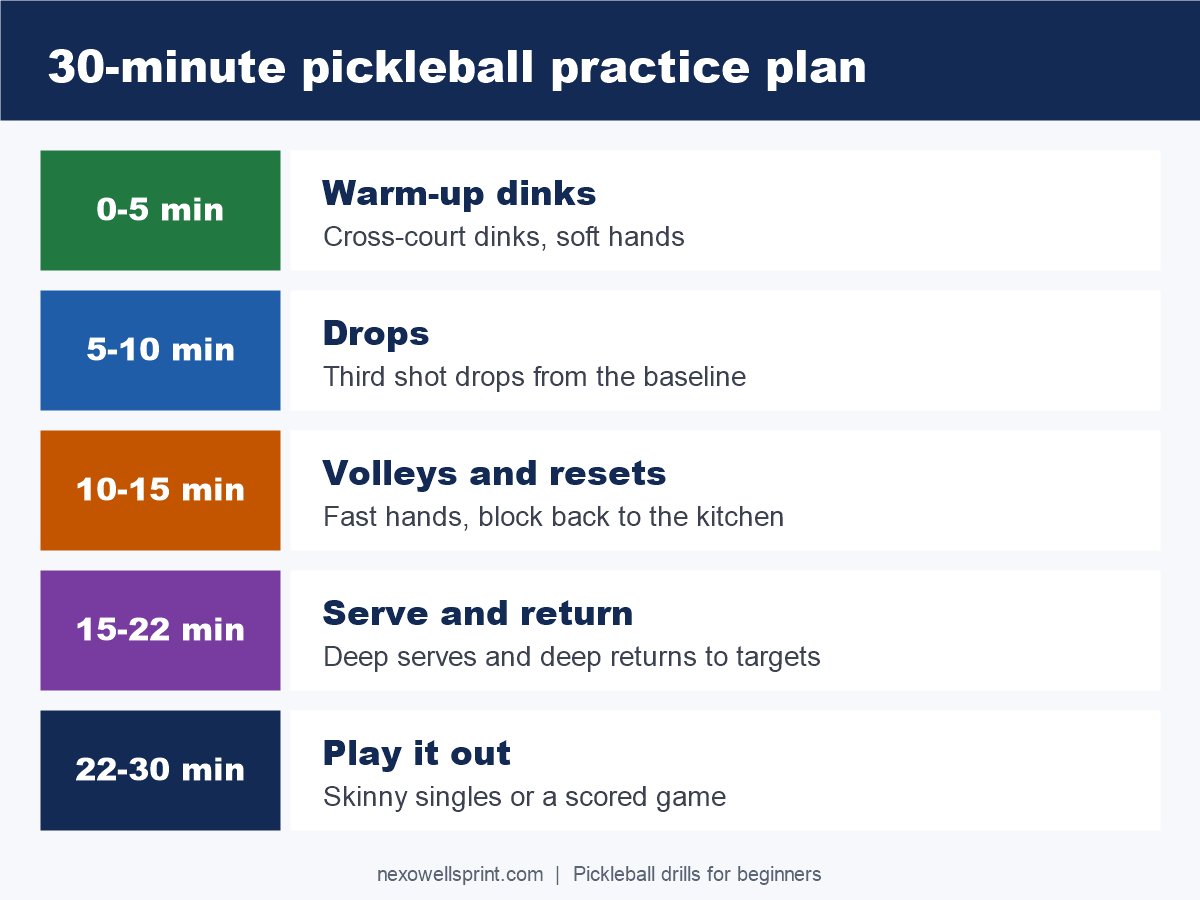
A 30-minute pickleball practice plan
Use this plan before open play, or as a full practice session with a partner.
The Pickleball Drill Book: the best pickleball drill book to go deeper

The Pickleball Drill Book by Suzee Anderson
Perfect for: players and coaches who want a structured drill library from beginner to advanced.
- DrillsMore than 190, with variations and progressions
- AuthorSuzee Anderson, former top-10 pro, PPR Pro and Coach Developer
- PublisherHuman Kinetics
- FormatsKindle (due 4 Dec 2026) and paperback (288 pages)
Why we recommend it: Human Kinetics describes it as the most complete pickleball drill book on the market. Each drill comes with coaching tips and illustrations, and a drill finder helps you pick drills by skill. It’s a natural next step once the 16 drills above feel easy, and an easy Christmas gift for a pickleball player who has every paddle already.
See what’s inside The Pickleball Drill Book, chapter by chapter.
Keep in mind: It’s a new title available to pre-order, so check the delivery date on the listing if you’re buying it as a gift.
Gear that makes pickleball drills easier

Franklin X-40 Outdoor Pickleballs
Perfect for: filling a practice bucket so you spend more time hitting and less time collecting.
Keep in mind: Read our Franklin X-40 review and best outdoor pickleballs.

Boulder 10 ft Adjustable Multi-Sport Net
Perfect for: dink and volley drills in a driveway or garage.
Keep in mind: For a full-width court net, see our portable pickleball nets guide.

Fostoy Portable Pickleball Net with Wheels
Perfect for: turning any flat court or lot into a practice court.
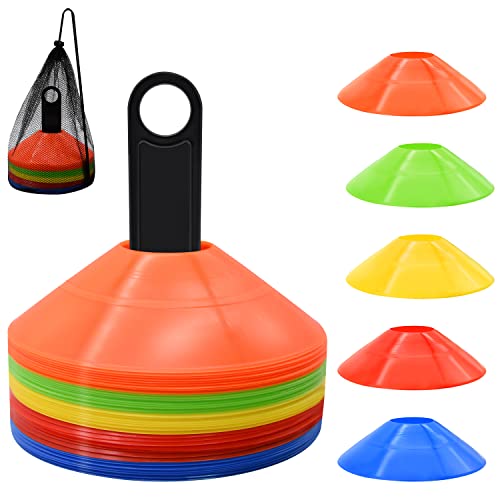
Disc Cones, 50 Pack
Perfect for: serve targets, dink targets and footwork squares.
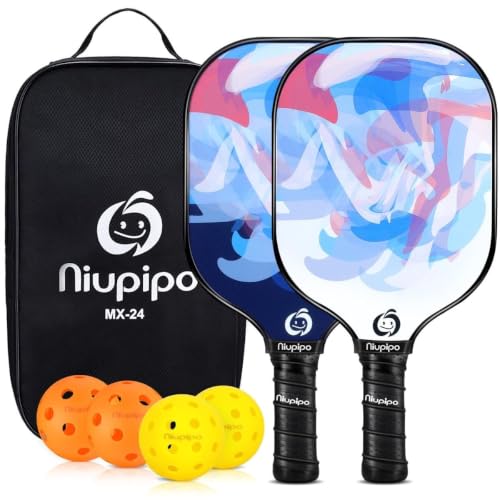
niupipo Fiberglass Paddle Set of 2
Perfect for: getting a friend or family member on court with you.
Keep in mind: See our beginner paddle sets and the paddle finder.
Pickleball drills by level
| Level | Focus | Drills |
|---|---|---|
| New players | Consistency | Wall dinks, cross-court dinks, serve to targets |
| Beginners (2.5 to 3.0) | Getting to the kitchen | Return depth, third shot drops, kitchen line shuffles |
| Intermediate (3.0 to 3.5) | Soft game under pressure | Reset drill, transition drill, skinny singles |
| Advanced (3.5+) | Speed and placement | Volley exchange, figure-8 dinks, scored drop games |
Common mistakes when drilling
- Drilling too fast. Speed hides bad technique; slow down until the shot is clean.
- No target. Without a target you can’t tell if you’re improving.
- Only drilling what you’re good at. Spend most of your time on your weakest shot.
- Skipping footwork. Many “bad shots” are really late feet.
Pickleball drills: frequently asked questions
What are the best pickleball drills for beginners?
Start with cross-court dinks, serving to targets and the third shot drop drill. They build the soft game and consistency that win most recreational points.
How can I practice pickleball by myself?
Use a wall for dinks and volleys, serve a bucket of balls at targets, and self-feed drops from the baseline.
What pickleball drills can 2 players do?
Cross-court dinks, the third shot drop drill, volley exchanges, the reset drill, return-of-serve depth and skinny singles.
How often should I drill?
Even 10 to 15 minutes before you play, two or three times a week, makes a noticeable difference.
Is there a good pickleball drill book?
The Pickleball Drill Book by Suzee Anderson (Human Kinetics) has more than 190 drills with progressions and coaching tips, and is a strong choice for players and coaches.
Final word
Pick two or three of these pickleball drills, give them 10 minutes before every session, and track your numbers. When you want more variety and structure, The Pickleball Drill Book is the next step. Shopping for a player? See our pickleball gifts for him and for her.
For official rules, see USA Pickleball.
How we chose
These drills are standard coaching drills written in our own words and ordered from easiest to hardest. Book details come from the publisher, Human Kinetics, and the Amazon listing. We do not show prices or ratings because they change often; check the current price on Amazon. How we pick products.

We research sports gear for players, coaches and sports parents. We compare specs, check maker information and owner feedback, and name one clear pick for each kind of player. How we pick · Affiliate disclosure