Updated November 23, 2026 · 8 min read
We earn a commission when you buy through our links, at no extra cost to you. How this works.
Short on time? Our picks
 Best overallUnique Sports Dribble SpecsCheck price on Amazon →Best for strength and controlSKLZ Weighted Training Basketball, 3 lbCheck price on Amazon →
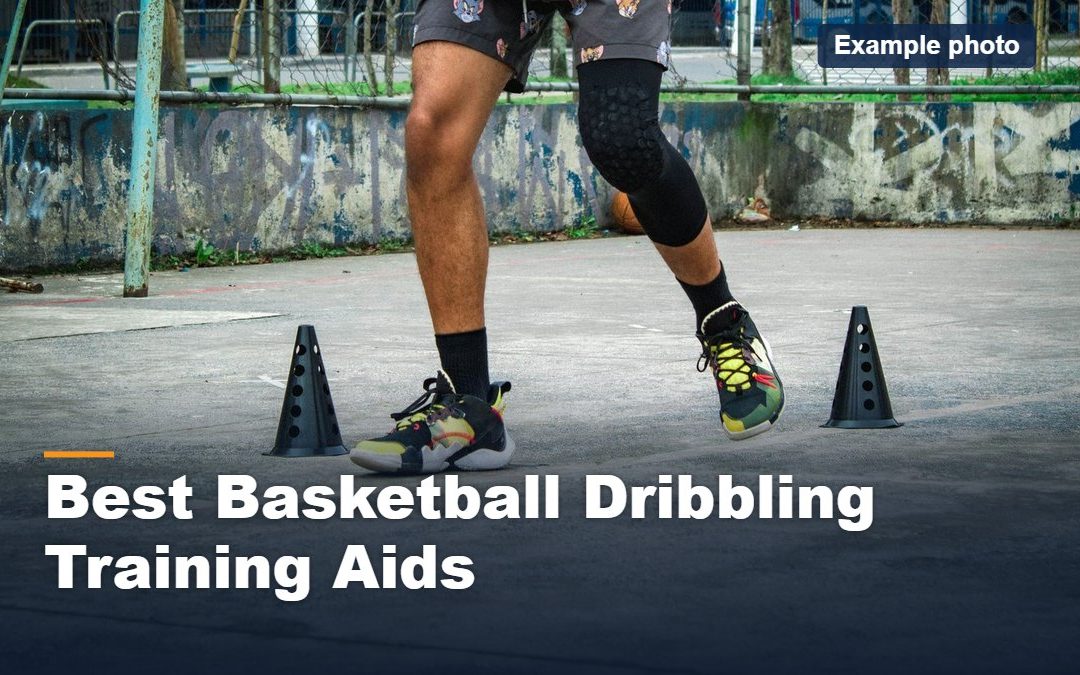
Great ball handlers make it look effortless: eyes up, ball low, changing direction without a second thought. That control does not come from games alone. It comes from thousands of repetitions in the driveway, the garage or an empty gym. The right dribbling training aids make those reps harder, more focused and more fun, and they help players break the most common bad habit of all: looking down at the ball.
This guide picks the best basketball dribbling training aids for home, kids, youth and teams: dribble goggles, a weighted training ball and a dummy defender. We also share a simple 20-minute ball-handling workout and drills you can do in a small space.
Best overall
Unique Sports Dribble Specs
Classic dribble goggles that block your view of the ball when you look down, so you learn to dribble with your eyes up, without changing your shooting form.
Quick answer: the best dribbling training aids
- Best overallUnique Sports Dribble Specs
- Best for strength and controlSKLZ Weighted Training Basketball, 3 lb
- Best for teamsDribble Goggles, 12 Pack · one pair per player
- Best for game movesGoSports XTRAMAN Dummy Defender · practice against a defender
Pick by what you want to improve
Unique Sports Dribble Specs
The simplest way to stop looking at the ball. Wear them for every ball-handling session.
SKLZ Weighted Training Ball
A 3 lb ball that builds hand, wrist and forearm strength, so your game ball feels light.
Dribble Goggles, 12 Pack
Enough goggles for a full team or class to train together.
GoSports XTRAMAN Defender
A stand-in defender for crossovers, drives and shooting over a hand.
The best dribbling training aids, reviewed
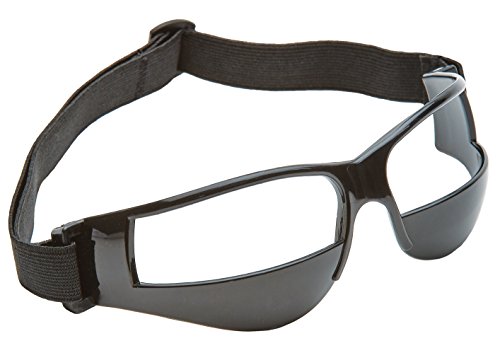
Unique Sports Dribble Specs
You need this if: you or your child look down at the ball while dribbling.
- TypeDribble goggles
- FitAdjustable, soft plastic
- UseAll ball-handling drills
Why we recommend it: The lower part of the goggles blocks your view of the ball, so you have to feel it with your fingertips while watching the court.
Keep in mind: They feel strange at first, and players will lose the ball a lot in the first sessions. That is the point: stick with it for a few weeks.

SKLZ Weighted Training Basketball, 3 lb
You need this if: you want stronger hands and better control so your game ball feels lighter and easier to handle.
- Weight3 lb
- Size29.5 in, men’s size 7
- CoverFaux leather
Why we recommend it: A heavy ball challenges your fingers, wrists and forearms, so a normal ball feels quick and light afterward. Same size as a regulation men’s ball, so the skills transfer.
Keep in mind: Use it for dribbling and passing, not for shooting; a heavy ball can change your shooting form. It is a men’s size, so young kids may find it too big and heavy.

Dribble Goggles, 12 Pack
You need this if: you coach a team, class or camp and want every player to train eyes-up at once.
- Pack12 pairs
- TypeDribble goggles
- UseTeam drills
Why we recommend it: A full set of goggles for a team at a much lower price per pair than buying singles.
Keep in mind: Wipe them down between players.
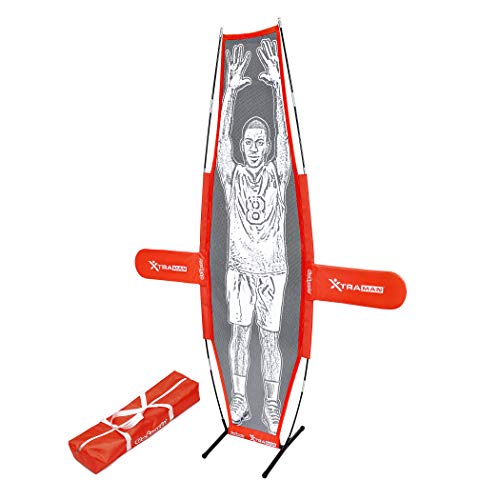
GoSports XTRAMAN Basketball Dummy Defender
You need this if: you practice alone and want something to dribble around and shoot over.
- TypeDefender mannequin
- UseMoves, drives, shooting
- Developed withBasketball coaches
Why we recommend it: Practicing moves against thin air is not the same as working around a body. XTRAMAN gives you a defender with arms up to cross over, drive past and shoot over.
Keep in mind: Durability and weight get mixed reviews, especially outdoors in wind. Store it inside when you can.
Comparison table
| Training aid | Trains | Best for |
|---|---|---|
| Dribble Specs | Eyes up | Every player |
| SKLZ weighted ball | Strength, control | Teens and adults |
| Goggles 12 pack | Eyes up | Teams |
| XTRAMAN | Moves, shooting | Solo practice |
Do dribble goggles really work?
Yes, when used consistently. Dribble goggles do not teach moves on their own, but they force you to stop relying on your eyes. Your hands learn where the ball is by feel, and your eyes are free to read the defense and spot open teammates. Most players notice a difference after a few weeks of regular use. Use them for drills, not in scrimmages, where you need your full vision.
 ▶ Spalding Dribble Goggles
A coach demonstrates how dribble goggles are used in training. The video loads from YouTube only when you press play.
20-minute ball-handling workout
- Warm-up (3 min): pound dribbles with each hand, waist height, then low.
- Stationary drills with goggles (5 min): crossovers, between the legs, behind the back, 30 seconds each, both sides.
- Two-ball dribbling (4 min): dribble two balls at the same time, together and alternating.
- Weighted ball (3 min): pound dribbles and crossovers with the weighted ball, then switch back to your game ball.
- Moves with a defender (5 min): use a chair, cone or XTRAMAN; attack, make a move, finish with a layup.
Do this four or five times a week and track how long you can go without losing the ball.
Dribbling drills for small spaces
- Pound dribbles: dribble as hard as you can, low and controlled, 30 seconds per hand.
- Figure eights: dribble in a figure-eight pattern around and between your legs.
- Tap dribbles: very fast, very low dribbles just above the floor.
- Wall passes and catches: pass against a wall and catch into a dribble move.
- Tennis ball toss: dribble with one hand while tossing and catching a tennis ball with the other. Great for focus and coordination.
How to improve dribbling in basketball
- Keep your eyes up. Goggles help build this habit.
- Use your fingertips, not your palm. Fingertips give control.
- Stay low. Bend your knees; a low dribble is harder to steal.
- Train your weak hand. Spend more time on it than on your strong hand.
- Practice every day. Ten focused minutes beats an hour once a week.
- Add game speed. Once a move is smooth, practice it at full speed.
Dribbling training aids for kids
Kids improve fastest when training feels like a game. Dribble goggles are fun for kids, and racing a parent or sibling through a cone course keeps them motivated. Use a ball sized for them: size 5 for younger kids and size 6 for older girls and many boys ages 12 to 14. Heavy training balls are better saved for teens and adults. For balls for indoor and outdoor play, see our guides to the best indoor basketballs and best outdoor basketballs.
Other useful basketball training equipment
Ball handling is only part of the game. A ball return makes shooting practice much more efficient; see the best basketball return nets. Cones and an agility ladder are great for footwork; see the best agility ladders and cones.
Two-ball dribbling: why it works
Dribbling two balls at once is one of the best ways to train your weak hand, because it has to keep up with your strong hand on every bounce. Start with both balls bouncing at the same time, then alternate, then try one high and one low. It is hard at first, which is exactly why it works. You only need a second ball of the same size.
Common dribbling mistakes
- Dribbling too high: a ball bouncing at chest height is easy to steal. Keep it at or below the waist.
- Slapping the ball: slapping with the palm reduces control; push the ball with your fingertips.
- Standing straight up: bend your knees and stay in an athletic stance.
- Only using the strong hand: defenders will force you to your weak side.
- Dribbling without a purpose: in games, every dribble should move you somewhere useful.
Strobe and training glasses
Some advanced training programs use strobe glasses, which flicker to make your brain work harder to track the ball and the court. They are much more expensive and mainly used by older players and trainers. For most players, simple dribble goggles give most of the benefit at a fraction of the price.
How coaches use dribble goggles
Many youth coaches run the first 10 minutes of practice with dribble goggles: stationary drills, then full-court dribbling with eyes on the coach, who holds up fingers for players to call out. It turns eyes-up dribbling into a fun challenge and builds the habit every practice.
Is dribbling a basketball good exercise?
Yes. Fast dribbling drills raise the heart rate, work the forearms, shoulders and legs, and improve coordination. A 20-minute ball-handling session with short rests is a solid workout, especially when you include low stances and quick changes of direction.
Basketball buying guides
Basketballs
Shoes and gear
Hoops and training
- Portable basketball hoops
- Indoor basketball hoops
- Mini hoops for kids
- Basketball return nets
- Dribbling training aids (this guide)
- Basketball training equipment
Basketball dribbling training aids: frequently asked questions
What is the best basketball dribbling training aid?
Dribble goggles such as the Unique Sports Dribble Specs are our top pick, because looking down at the ball is the most common dribbling problem.
Do dribble goggles work?
Yes, with regular use. They force you to dribble by feel so your eyes stay up, and most players notice improvement within a few weeks.
Should I shoot with a weighted basketball?
It is best not to. Use a weighted ball for dribbling and passing, and shoot with a regular ball so your form stays the same.
How can I improve my dribbling at home?
Do 15 to 20 minutes of ball handling most days: pound dribbles, crossovers, two-ball drills and moves around a chair or cone.
What size basketball should kids use for dribbling drills?
Size 5 for younger kids and size 6 for older girls and many boys around ages 12 to 14. Teens and adults usually use size 7 for boys and men.
Can I use dribble goggles in games?
No. They are a training tool. In games you need your full vision.
How long does it take to improve ball handling?
With daily practice, many players see real progress in four to six weeks.
Is a dummy defender worth it?
If you practice alone a lot, yes. It helps you practice moves and shooting over a defender in a game-like way.
How we chose
Prices change often, so check the current listing before you buy.
For official rules and equipment standards, see USA Basketball.

We research sports gear for players, coaches and sports parents. We compare specs, check maker information and owner feedback, and name one clear pick for each kind of player. How we pick · Affiliate disclosure